
 Tiếng Việt
Many SMEs fall into the same trap: believing slow growth is a lead problem. But in most cases, the issue is not demand; it is the sales process behind it. Without a clear lead conversion strategy, even strong interest leaks away through inconsistent follow-ups and scattered communication.
When you focus on improving sales conversion, you realize you already have enough opportunities; they are just not being turned into revenue. The promise is simple: a predictable system always outperforms unpredictable spikes in inquiries.
The Illusion of Scarcity: Why You Think You Need More Leads
Many founders instinctively chase new inquiries because fresh leads feel productive. New emails, new calls, new form submissions create a quick dopamine hit that makes the business feel active, even if the real issues inside the sales process remain untouched. This emotional bias convinces teams that growth will come from volume, not from discipline. Forbes reports that 79 percent of marketing leads never convert due to poor follow-up, not because the business needs more inquiries.
But most SMEs don’t have a lead scarcity problem; they have a sales conversion system problem. Under the surface, the real bottleneck is weak lead nurturing and an underutilized pipeline that never gets the attention it deserves. Leads slip through the cracks not because there are too few, but because the sales process lacks structure and timely follow-up.
Consider a simple example. A business may have 200 warm contacts collected over months, yet only 12 ever received proper follow-up. The remaining 188 sit untouched, forgotten in a spreadsheet, a CRM, or worse, in scattered messages across email and chat apps.
Founders assume they need more leads. In reality, they need a process that captures, organizes, and nurtures the ones they already have.
Why Deals Stall: The Real Reasons Leads Do Not Convert
Even when demand is strong, many SMEs struggle with sales conversion because opportunities often break down silently within the sales process. Three issues consistently appear across growing teams.
1. Missed Follow-Ups (The Number One Conversion Killer)
The biggest contributor to lost revenue is the missed follow-up impact. Buying intent drops sharply within 48 hours, as Harvard Business Review found that leads contacted within the first hour are seven times more likely to qualify, reinforcing how quickly buying intent decays. We often see founders collect inquiries on Monday and reply on Thursday, unsure why the conversation goes cold. This is not a lead problem. It is a decay problem caused by an inconsistent rhythm.
2. Unclear Ownership of the Pipeline
Another common roadblock is unclear ownership. Who is responsible for contacting the lead? Who moves them to the next stage? The founder? The SDR? The account manager? Without defined roles, leads sit untouched in the CRM because everyone assumes someone else is handling them. Strong sales pipeline management eliminates this gap by assigning clear accountability.
3. Inconsistent Communication Across the Sales Journey
Finally, many SMEs create friction without noticing. Prospects receive different tones, reply times, and expectations depending on who interacts with them. This weakens trust and slows sales conversion. A unified sales process keeps the experience consistent from the first touch to the proposal stage. For example, one business we worked with had three team members emailing leads with wildly different messaging, which confused prospects and stalled progress.
The Hidden Cost of Small Leaks: When Weak Processes Quietly Kill Revenue
Most teams focus on big wins and big losses, but the real damage often comes from the small leaks that create ongoing lead-to-revenue friction. These leaks sit inside the sales workflow, unnoticed, yet collectively they drain momentum and weaken closing rates.
Consider how these issues show up in day-to-day operations:
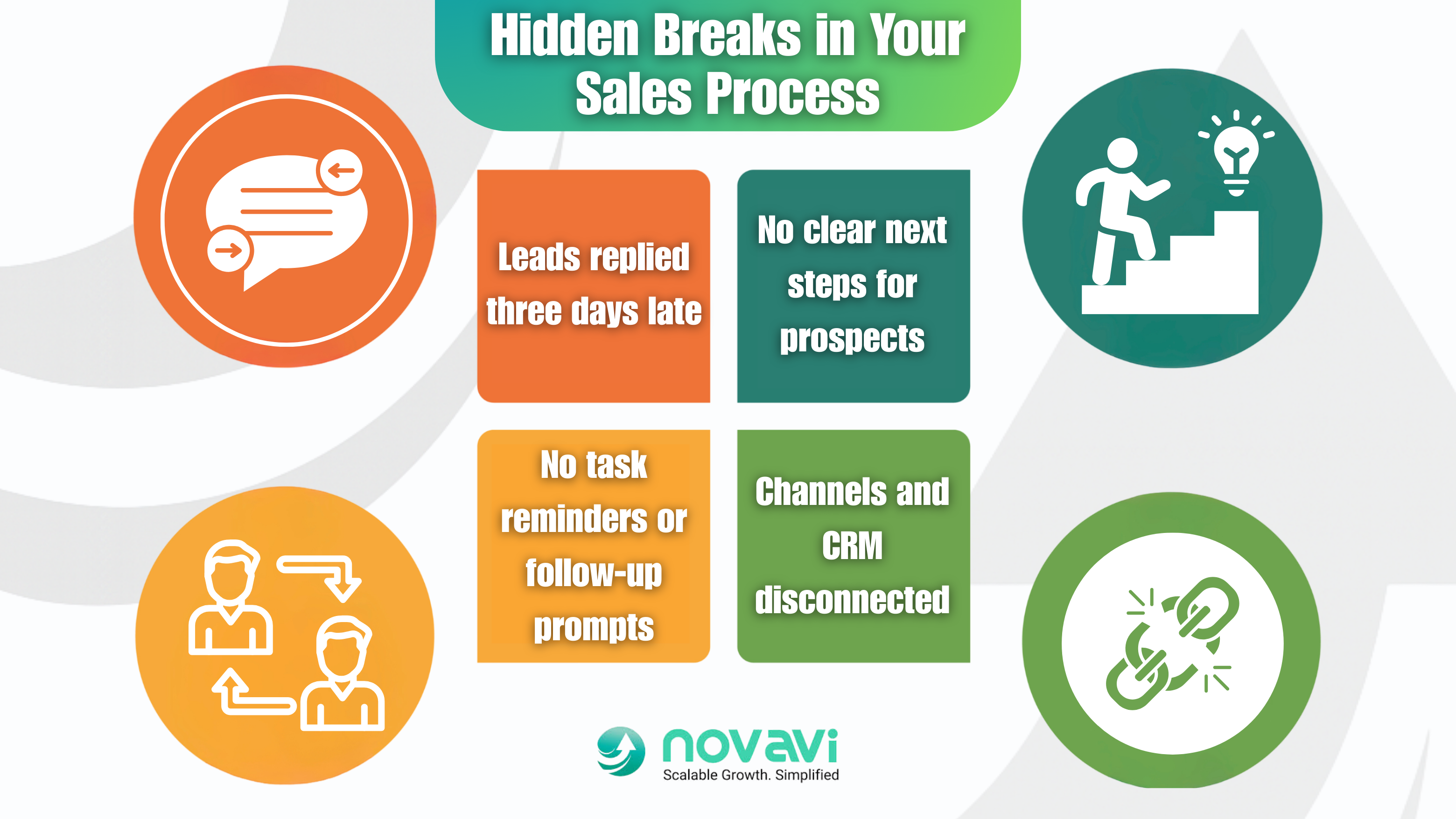
Individually, each of these leaks can reduce win rates by 10 to 20 percent. A late reply means your competitor gets there first. A missing task reminder means the lead goes cold. A vague next step means the prospect loses confidence. A lost message means the conversation dies before it ever fully begins.
Employees lose up to 20 percent of their workweek searching for information, which amplifies the impact of scattered communication channels, and the compounding effect is what hurts the most. Ten small leaks do not create ten small losses; they add up to a 50 to 60 percent drop in potential revenue. As we often remind clients, SMEs underestimate how much weak process design destroys otherwise good opportunities.
A strong sales workflow prevents these losses by creating clarity, consistency, and accountability across every stage of the sales process.
A 3-Step Fix: Build a Sales System That Converts Consistently
To break the cycle of lost opportunities, SMEs need a sales conversion system that removes guesswork and replaces it with clarity and consistency. When the sales workflow becomes structured and predictable, sales conversion improves naturally because every lead is guided through the same intentional journey. The framework below helps teams regain control and convert more of the demand they already have.
Step 1: Organize Your Pipeline (One Source of Truth)
Start by improving sales pipeline management. Every contact, interaction, and stage should live inside one unified dashboard. This is the one dashboard rule. When the entire team works from a single source of truth, you eliminate double-handling, reduce confusion, and ensure that no lead is overlooked within the sales workflow.
Step 2: Define a Response Rhythm
Next, create a predictable sales response rhythm. Set a daily cadence for new inquiries, a weekly cadence for active deals, and a monthly cadence for long-term opportunities. This structure removes randomness and strengthens sales conversion, because prospects receive timely, reliable communication at every step of the sales workflow.
Step 3: Automate Accountability
Finally, build a sales accountability system that uses reminders, tasks, triggers, and handoff rules to ensure consistent follow-up. Automation amplifies discipline without requiring micromanagement. Gartner reported that companies automating lead management see a 10 percent or more increase in revenue in as little as six to nine months.
What Changes When You Stop Chasing Leads and Start Converting Them
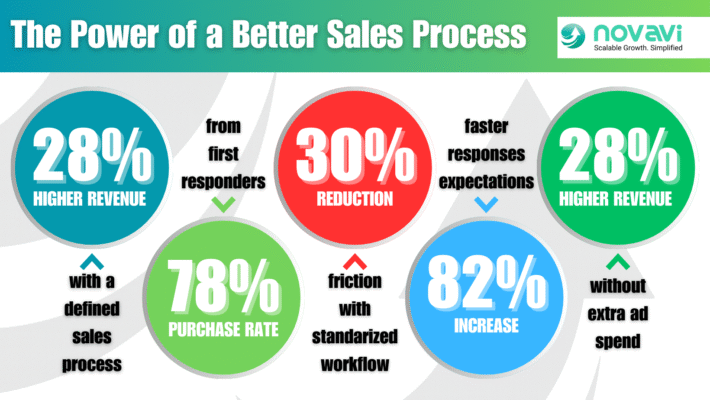
When you shift your focus from acquiring more leads to strengthening your internal system, growth becomes calmer and more predictable. Sales conversion rises because you improve lead conversion through structure, not luck, and the founder no longer carries the stress of unpredictable revenue spikes. The infographic below highlights exactly how much impact a stronger system creates:
Ready to Turn Interest Into Revenue?
You do not need more leads; you need a better system that unlocks the full power of your existing demand. Novavi helps SMEs design a sales conversion system for SMEs that transforms every part of the sales process into predictable, repeatable growth. If you are ready to turn scattered interest into consistent revenue, we can help you build the system that makes it possible.
Further Readings:
Patel S. Is Your SaaS Startup Optimized For the Right Conversions?
Oldroyd J, McElheran K, and Elkington D. The Short Life of Online Sales Leads
Chui M, Manyika J, Bughin J, Dobbs R, Roxburgh C, Sarrazin H, Sands G, and Westergren M. The social economy: Unlocking value and productivity through social technologies
Wainwright C. 25 Jaw-Dropping Marketing Automation Stats [Data]