
 Tiếng Việt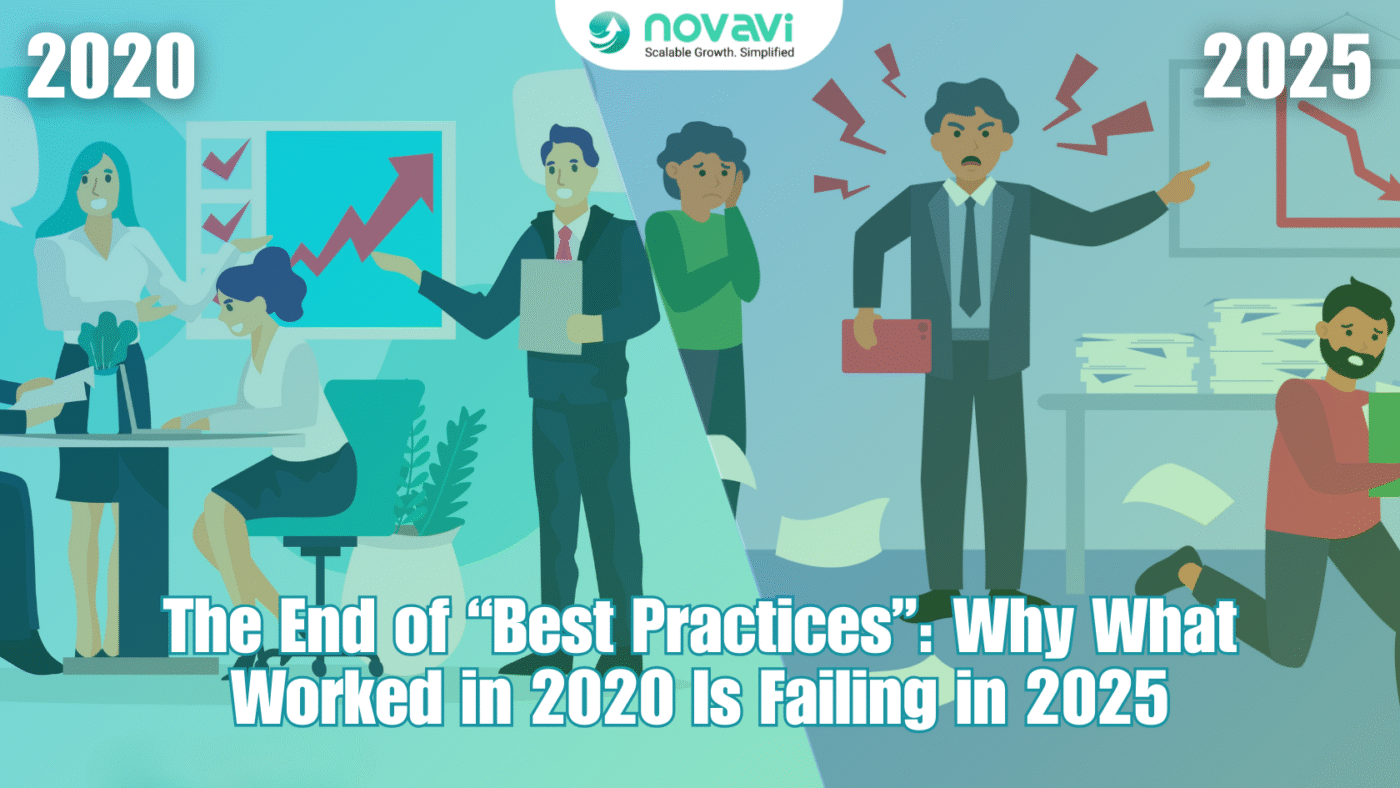
In 2020, following best practices felt like the responsible thing to do. SaaS growth rewarded repeatable playbooks, proven funnels, and widely shared tactics. Markets were quieter, customer attention was easier to earn, and doing what worked for others often worked for you too.
In 2025, that logic no longer holds.
Across the SaaS companies we work with at Novavi, we see the same pattern repeating. Founders are not underperforming because they lack effort, talent, or ambition. They are underperforming because the systems they rely on were designed for a different market reality. Channels are crowded, feedback cycles are faster, and noise is everywhere. Yet many teams are still operating from outdated assumptions.
What once defined smart SaaS growth is now quietly limiting it.
How Best Practices Killed Innovation
Best practices did not start as a problem. They emerged in a period of relative scarcity, when early movers had room to experiment and codify what worked. These insights were valuable because they reduced uncertainty and helped teams move faster.
Over time, however, best practices hardened into rules.
As more companies adopted the same frameworks, messaging formulas, and go to market structures, differentiation began to disappear. We have seen this repeatedly in our work. Teams follow best practices faithfully, execute well, and still struggle to stand out. The paradox is clear. Following proven methods now guarantees average results.
Innovation slows when teams optimize for safety over learning. When success is defined as compliance with outdated playbooks, experimentation feels risky and deviation feels irresponsible. In reality, the opposite is true. In today’s environment, clinging to best practices often creates more risk than abandoning them.
Copycat Strategies in Saturated Markets
In 2025, copied tactics rarely fail because they are poorly executed. They fail because buyers have already seen them.
Channels are saturated. 18% of marketers say that gaining and keeping followers on social media is now one of their biggest challenges, largely due to oversaturation. Audiences have developed pattern recognition, the moment a campaign launches, it is subconsciously compared to dozens of similar efforts. When everyone runs the same funnel, differentiation collapses before the message is even processed.
At Novavi, we call this invisible competition. You are not losing to a better idea. You are losing to sameness. Even strong offers lose impact when delivered through familiar formats. This is why many SaaS teams feel like they are shouting louder without being heard more clearly.
In this environment, relying on best practices as a shortcut to credibility no longer works. Familiarity now signals noise, not trust.
Why ROI Keeps Declining Even When Execution Is Strong
One of the most common frustrations we hear from founders is that performance is slipping despite strong execution. Campaigns are launched on time. Funnels are optimized. Metrics are monitored closely. And yet returns keep declining.
This is not a failure of effort. It is a signal.
Optimizing harder does not fix structural sameness. More spend accelerates fatigue. Efficiency without adaptation compounds risk. When teams double down on best practices in a changing market, they often amplify the very dynamics that are holding them back.
Declining ROI is rarely a sign that your team is doing the wrong things. In SaaS, acquiring a new customer costs 4 to 5 times more than retaining an existing one, meaning that inefficient or copycat acquisition strategies become far more damaging as performance softens.
The Rise of Adaptive Growth Systems
What is replacing static playbooks is not a new list of tactics, but a fundamentally different approach to growth.
The most resilient SaaS companies we work with are building adaptive growth systems. These systems are designed to learn continuously, respond to feedback, and evolve as markets change. Instead of locking into fixed strategies, they treat growth as an ongoing process of discovery.
At the heart of this shift are learning systems. Every campaign, interaction, and experiment produces insight that feeds the next decision. Performance data is not just reported. It is actively used to adapt direction.
This marks a clear departure from best practices as rigid instructions. Adaptive systems operate on a simple loop: learn, test, adapt. This is not a tool change. It is a mindset change.
From Campaigns to Learning Engines
In adaptive organizations, campaigns are no longer treated as one-off launches. They function as learning engines.
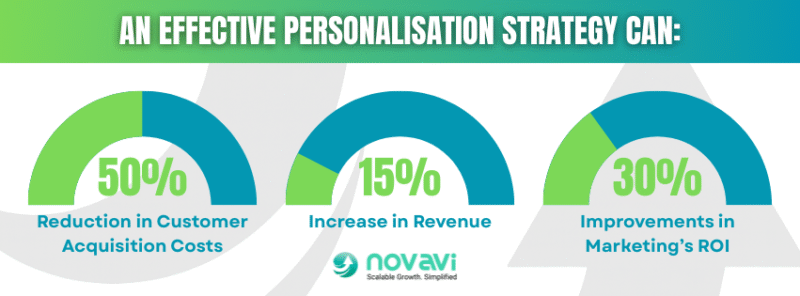
Each initiative is designed to answer questions, not just hit targets. This expectation is no longer optional. McKinsey reports that 71% of consumers now expect personalised interactions, while 76% express frustration when personalisation does not occur, reinforcing why campaigns must function as learning engines rather than static executions.
Why did this segment respond differently? What assumptions were wrong? Which signals matter most right now? These insights shape what comes next.
This approach relies on continuous testing, but not in the shallow sense of conducting endless A-B experiments. It is about deliberate, focused learning that compounds over time. Campaigns become inputs into learning systems rather than isolated attempts at growth.
When teams operate this way, progress becomes more durable—growth compounds through learning, not repetition.
Benchmarks Are Not Instructions
Benchmarks are useful, but they are frequently misunderstood.
Most benchmarks describe what happened, not why it happened. They capture outcomes without context. When founders treat benchmarks as instructions, they inherit assumptions that may not apply to their market, timing, or audience.
We often see teams chasing benchmarks because they feel safe. If others succeeded this way, it must be right. But this is how best practices quietly constrain thinking. What worked for someone else under different conditions becomes a ceiling rather than a reference point.
A more effective mindset is to treat benchmarks as signals, not templates.
Framework: Turn Benchmarks into Experiments
At Novavi, we encourage teams to reframe benchmarks as hypotheses.
Instead of copying outcomes, we ask different questions. Under what conditions did this work. Which of those conditions exist in your context. What assumptions need to be tested rather than adopted.
A simple framework follows:
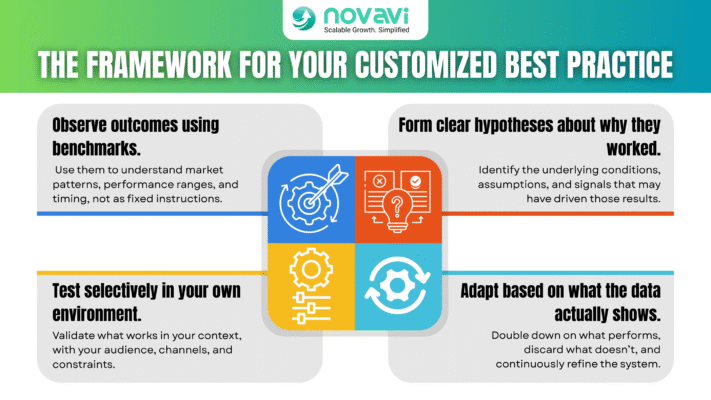
This is where learning systems and continuous testing reinforce each other. Experiments generate insight. Insight reshapes strategy. Over time, growth becomes resilient because it is grounded in feedback, not imitation.
What This Means for SaaS Founders in 2025
For SaaS founders, this shift has important implications.
Growth is no longer about copying faster than competitors. Advantage now comes from learning quicker than the market changes. Systems outperform tactics in volatile environments because they adapt rather than ossify.
This is why the role of growth consulting is changing. Increasingly, founders are not looking for ready-made answers. They are looking for partners who can help them redesign how growth decisions are made. Growth consulting in 2025 is less about prescribing tactics and more about building adaptive capability inside teams.
The companies that thrive are not those with the best playbooks, but those with the strongest learning loops.
Rethink Before You Repeat
Best practices are not inherently wrong, but they are incomplete when treated as timeless truths. In a fast-moving market, repeating what worked before can quietly limit what comes next.
If your growth system still relies on playbooks built for 2020, it may be time to step back and rethink the model itself. At Novavi, we work with founders to question assumptions, design learning systems, and build growth approaches that adapt as markets change.
Contact us to explore how your growth strategy can move from imitation to intelligent adaptation, before outdated best practices slow you down.
Futher Readings
Forsay C (2025) The Top 6 Marketing Challenges Expected Globally in 2025, And How to Overcome Them [Data + Expert Tips]
Kumar S (2025) Customer Retention Versus Customer Acquisition
McKinsey & Company (2023) What is personalization?
McKinsey & Company (2025) Unlocking the next frontier of personalized marketing